Newsletter of Mario Pagliaro, 26 August 2003:
“Of sea urchins, volcanoes, earthquakes... and engagement

To Alessandro Cestelli, In memoriam

Summary:
How Marcello Carapezza and Alberto Monroy created in Palermo world-class Schools in geochemistry and in developmental biology 

Marcello Carapezza

When the young Marcello Carapezza graduated in chemistry at Palermo’s University in the late ‘40s, the University was in debacle following World Word II when the US and Royal Air Force had half buried Palermo with heavy bombings in 1943.

A great scientific School that had recently hosted also the future Nobel Prize in Physics Emilio Segrè, was practically over. 

A native of Petralia, a small mountain village 90 km faraway from Palermo, Carapezza studied chemistry and worked for a while at the Institute of Mineralogy where Perrier had been working, before moving to Pennsylvania State University where he will learn the novel high-pressure and temperature experimental techniques employed to study the multiphase rock system.

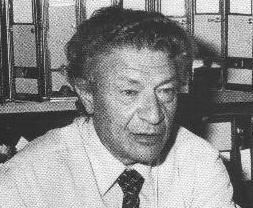
Marcello Carapezza in his workroom in 1985There -- improving on the work of Hans Eugster -- Carapezza will discover that the oxygen partial pressure in a solid solution is a linear function of the relative composition -- an important finding useful in the study of rocks, and thus of practically of any geological system, including planets. 

Educated also on the classic thought at the Italy's high-school called "Liceo classico" (created by the other Sicilian, Giovanni Gentile), Carapezza was a man of renaissance humanism: “A world without myths -- he was used to say -- is a world without ideals”; an attitude that brought him to explain the meaning of Pirandello’s novel “Ciaula scopre la luna” to a NASA astronauth, or criticise with the same ease a paint of his friend and great Italian painter Renato Guttuso

The father of 4 kids, in 1959 Carapezza will leave again Palermo heading to Bologna’s University from where he will return only in 1970 after having won the chair of Applied geochemistry in 1969. 

Back in Sicily, Carapezza will change his research interests to what his friend and colleague Marco Leone has called "the relationship man-nature, as those -- explains Leone -- were the times when the first effects of the human barbarism on nature were becoming clear". 

 And thus, scientific research applied to environmental problems from the degradation of monuments due to atmospheric pollution (how to restore monumental stones to their natural state?) to -- and mainly -- the citizens' protection from earthquakes and volcanoes euptions through the geochemical surveillance

"His objective -- adds Leone, a professor of mineralogy now retired -- was the creation of a modern, reliable scientific system for the problems of civil defence in Italy"; Carapezza will find the support of Italy's Research Council (CNR) which will sustain his efforts by first financing the finalised projectGeodynamics” (a multi-participant research program which will be instrumental in realizing the continual monitoring system in question) and then by establishing in Palermo a new Institute of fluids geochemistry (IGF) under the leadership of Marcello himself. 

The finalised project had among its main objectives the evaluation of seismic and volcanic risks in Italy. Now, you have to think that despite an history of terrific earthquakes and volcanic explosions -- from Pompei’s eruction in 76 a.C. to the Messina devastating earthquake in 1908, and many others -- Italy's law still in 1976 absurdly prescribed that in order to be consider seismic, a region had to be the place of an earthquake recorded in the 20th century only.

This, for example, excluded the plain of Catania from the dangereous regions, while it was and is well known that in the whole plain below the Mount Etna earthquakes are instead extremely likely, and similarly dangereous, as proved by the city destruction in 1683 or by that of Messina (50 km faraway from Catania) in 1908. 

With the project "Geodynamics", Carapezza and the CNR came to the conclusion that the Government should urgently adopt a different classification of territory seismicity: Historical and statistical. One for which, the Catania plain resulted among the most risky places in Italy. 

He and his colleageus had not even completed the report of the project "Geodynamics", that on November 23, 1980 the Irpinia earthquake (2000 deaths and damages for billion dollars),  revealed how serious and far-reaching was the obsolescence and the inadequacy of the Italian civil defence system.

Carapezza was a convinced follower of Voltaire’s teaching to the intellectuals of “living your own times” and was member of the Government Commission Great Risks, of the CNR's Volcanology Group, of the Commission for the Messina’s Bridge and even first chairman of the Committee “Earth sciences” of Italy’s Ministry of Education, with the task to conceive the teaching of geology in the Italian high-schools.  

Journalist

He was also a frequent contributor to magazines and newspapers, and in 1983 he attracted national attention during one of the worst recent eruptions of Mount Etna, the highest Europe's volcano dominating Catania, where -- exactly like in the Naples suburbs below the Veuvio -- a savage abusivism has caused entire villages to be edificated in highly risky zones.

Now, according to the famous urbanist Tonino Cederna -- likely exhausted after years of battles for the principle of lawfulness in a country where some 30% of the houses are illegal -- the best choice was clear: "To leave the volcano erupt quietly and let the lava destroy what it had to destroy". 

Carapezza did not agree and wrote an article of stringent actualness entitled “Man and his business: Survive” in the Sicily's newspaper "Giornale di Sicilia": 

“The deviation of the lava flow on Etna provoked the reaction of various ecologists… The articles of Giovanni Maria Pace and Antonio Cederna have shown the basic error of the their reasoning… To ignore man. Man does and can not exist in this abstract, perfect ecology imagined by Cederna. Because man provokes damages everywhere: Whether he tries to protect the environment or plants vineyard, orange groves or olive trees where before Mediterranean brush grew . 

"This should be called: Anandrecology, ecology without man! 

"I confess that having heard that the hollow in which the lava flow was to be deviated was considered for the vegetation growing there considered one of the 'rarest and most important environmental heritages', I was surprised when I went there and walked down it examining inch after inch: The only species growing there was a variety of thorns called by botanists Astragalis siculus, and commonly known as Holy thorns; one of the few plant which manages to grow on every type of volcanic rock at high altitudes, and which is present everywhere above a certain quota on Etna.

“To think that today we can do something to prevent the damages caused by the lava flow and not doing it, this is the most backward statement I ever heard in many years. In this way, we should continue to respect nature: What is for instance the duty of a wet clay formation on a slope? It’s clear: It should slide and anything that may stop it is ‘human arrogance’. 

"On one side, the experiments, and an attempt to find an explanation and to forecast and prevent, putting man before anything else. On the other side, an exhortation to do nothing”. 

Carapezza and Barberi were of course given permission from the Government and with the assistance of the Italian Army, they let the volcanic lava blast with several tubes of dynamite and were successful in diverting its flow from hitting the small city Nicolosi -- a method that, when applicable, is used today by the Geological services of several States worldwide. 

A convinced leftist, Marcello Carapezza will always be a man of irony, dialogue and compassion; and with the rare gift of managerial attitudes. 

Between 1972 and 1984 he will collaborate closely as University vice-chancellor with Giuseppe La Grutta, chancellor and professor of medecine. In this role, it will be Carapezza to conceive and follow personally the restoration of the old, splendid Palace “Steri di Chiaramonte”,  where the rectorate will eventually move in 1985. 

He will involve the great Italian architect Carlo Scarpa to project the restoration and it is also thanks to him that his friend Renato Guttuso donated to the University his famous painting "La Vucciria".  

"We were spending several Saturday afternoons in the portico of the first floor -- said La Grutta -- discussing of everything: from family problems to philosophy, to political ideologies (and their degeneration) and science”.

When he died on September 1987, Marcello Carapezza was only 62. 

Today the former IGF has become one of the 4 section of the novel Italy's national Institute of Volcanology (INGV) with over 30 geochemists working in Sicily at researches that were initiated by Carapezza when the words "geochemical surveillance" in Italy were unkown. 

The course of Geology at Palermo’s Science Faculty -- that he established and brought to world-class levels -- now hosts more than 500 students also thanks to the irresistible intellectual fashion of volanoes, earthquakes,  tsunami and the likes which attract a wide public also on Italy's State television.

The hall of the University Senate is now named after Marcello Carapezza and the painting “La Vucciria” shines in the rectorate.

Somehow, even his passion for the arts is preserved thanks to one of his sons (Fabio) who, having become Guttuso's adopted son and heir-at-law, today manages Guttuso impressive paintings collection preserving the painter name and managing to organise fantastic exhibitions in Italy and abroad. 

Marcello Carapezza was a serene, ironic gentleman scientist who witnessed personally the progressive destruction of the Italian main scientific institution, i.e. Italian public Universities, on which he said that “it is not possible that a nation which possesses one of the richest cultural patrimonies in the world should disappear from the universal scene  of knowledge because of unsustained claims which aim to level out values and humiliate merit”. 

Alberto Monroy

Alberto Monroy, the heir of an ancient noble family of Sicily descending from the Spanish explorer Cortez, graduated in Medicine in the mid '30s at the University of Palermo under the supervision of Enrico Luna. At that time biology was part of the medical studies and there were of course no “molecular” aspects of the subject, and Monroy studied comparative anatomy. Alberto Monroy: Founder of Palermo's School in developmental biology

Already during his University studies, and soon working on embryology with Otto Mangold, Monroy made himself conviced that the developmental aspects of biology had their roots in chemistry

The war soon exploded also in Italy (1941) and with Palermo conquered by the American troops already in July '43, Monroy in 1944 decided to leave his city for Naples on a military airplane to go working at the Institute founded by the German zoologist Anton Dohrn. 

There, along with Adriano Buzzati, he realized rapidly that the obsolescence of the research in biology practiced in Italy was due to the isolation of the Country from the revolution which was taking place abroad with the discoveries of DNA and the basis of what had to become molecular biology in the Anglo-Saxon countries. 

Hence, in 1949 he was among the first Italian biologists to move to the United States, the emerging Country in research in biology, first working with Alfred Mirsky at the Rockfeller Foundation and then also at Woods Hale Marine Biological Lab where he will meet the likes of Erwin Chargaff and Paul Weiss (in whose house he will also meet Enrico Fermi, who -- similarly to Segrè -- had left Italy after Fascist ratial laws wanted by Mussolini and by the Italian king in 1938).  

His prolonged stay in the US will be crucial in opening the way to the young Sicilian biologists that he will educate, in order to let them acquire competences otherwise absent in Italy; and while still in America, Monroy in 1953 won the chair of Comparative anatomy at Palermo's Science Faculty.

Back in his city, Monroy founded the Institute of Compared Anatomy, naming it after “Andrea Giardina” -- a Sicilian biologist who had discovered already in 1901 a black small mass in the cells of the insect Ditysticus marginalis wich will later be be found composed of a pile of DNA containing the information needed for the proteins synthesis: The ribosomes. 

“He was a generous man – says his first student Giovanni Giudice –. In 1961 it was him to give me fundamental suggestions on my work on the riaggregation of sea urchins embryo cells, and yet he did not want his name added among the authors of the work: ‘Otherwise, -- he said -- everyone will think I am the author of the discovery'. 

"It should be kept present -- Giudice concludes -- that at that time there was no Institute’s director who did not pretend his name to be added in every work being produced by his research Institute”. 

In 1955 Monroy discovers that the fecondation of sea urchin eggs involves potassium ions transfer using microelectrodes capable to penetrate single cells; then (1956) proves that fecondation is associated with proteic synthesis and that when such synthesis occurs in the ribosomes, the latter organules associate in polyribosomes (1962), while with Giudice he also discovers that in virgin eggs, it is a protein to act as inhibitor impeding the ribosomes association (1966). 

In 1965, he publishes “Chemistry and physiology of fertilization” (Holt Rinheart and Winston) and in 1967 (and in 1985) along with C. Metz “Fertilization” for Academic Press, while along with Aron Moscona he will be the Editor of the series “Current topics in developmental biology” for the same prestigeous publisher since 1966 to his death in 1986. 

Monroy will hold the chair of Comparative anatomy at Palermo’s University between 1953 and 1969 becoming president of the Science Faculty already in 1955. A task by which he will be able to attract to Palermo's University eminent scientists such as the mathematician Lucio Lombardo Radice, the physicist Mariano Santangelo, the biologist Giuseppe Sermonti (who will establish in Palermo a School of genetics) and eventually also Eduardo Scarano, father of Italy's biological chemistry.

And he will make of his Institute a truly international place, bringing to Palermo the Nobel Prizes Salvador Luria, Neil Chargaff, Renato Dulbecco, Alexander Hollaender and many others allowing also many of his young students to go working and studying in their labs.

In 1969, however, Monroy decided to leave Palermo and to move to Naples where the Italy’s research council (CNR) will provide him with a new Laboratory of Embryology. He split his chair and left the teaching task in Palermo to Giovanni Giudice, to whom he also transfers the Institute directorship, carrying with him in Naples several some young Sicilian biologists. 

In 1976, nominated director of the Zoological “Station” Anton Dohrn, i.e. the same Institute where he had worked 25 year before, he finds out that -- as typical in Italy's research public Institutes -- most of the budget was spent on paying salaries.

"He called me -- adds again Giudice, who in the meanwhile had been elected in Palermo as Member of the Italian Parliament among the "Indipendents of Left" -- and asked: 'What can I do?'. 

'A law that transfers to the Italian State the task of paying the personnel salaries keeping apart the financing of research', I answered. And shortly, the law was passed by the Parliament and the Station bypassed its economic difficulties". 

Now, one needs not to know the fascinating life of the German intellectual Willi Munzenberg to know that the western Communist Parties had been active since the early ‘20s to attract to them all the best minds in the western societies. And the Italian communist Party was one of the best practitioner of Muenzenberg thought, having been founded by a literature scholar such as Antonio Gramsci and then being guided for 30 years by his University comrade Palmiro Togliatti

Hence, also the descendant of Cortez Monroy became first an elected member of the City Council of Naples and an active supporter of the first communist Mayor (Mariano Valenzi) of the city; and then, after 3 years, he resigned due to the excess of workload, "but -- Giudice points out -- in order to show his open sustain to Valenzi he joined the Italian Communist Party (PCI)". 

In about the same years, Giudice himself (still a MP) took a walk with the then president of the CNR Quagliarello, a biochemist from Naples, and obtained the creation in Palermo of the Institute of developmental biology (1980), where several young biologists will soon enter and who later will be able to achieve the first prenatal diagnosis of thalassemie and the first birth of a test-tube baby in Italy. 

An honorary member of the American Academy of Arts and Sciences, Monroy dies in Woods Hole, Massachusetts, in August ’86, where he was emeritus professor and where he had been teaching every summer for some 30 years.  

“Give to the young the means needed to do their research, and then let them have fun”, was used to repeat citing Anton Dohorn. Joy in science". 

Today, more than 150 people work in the 2 institutions that are named after him (the University Department of Cellular and Developmental Biology and the former CNR's Institute IBS), and a Foundation honours his name. 

Biology of course ha further evoluted in a powerful science in which genetic technology is used to develop life-saving drugs and top academic scientists do not consider an heresy anymore to join industry”, to detect DNA in ancient samples thanks to Kary Mullis or to isolate antioxidants in olives as does the Italian co-discoverer of the insulin synthesis Roberto Crea between California and southern Italy.

Students in Sicily have today the possibility to study and practice at high-levels biochemistry and geochemistry in the Schools founded by Marcello Carapezza and Alberto Monroy. 

To keep their memory alive will help them in continuing their scientific and civil endeavours allowing Carapezza and Monroy work to live in practice, again, in Palermo -- a city not exactly best known for its scientific achievements -- which instead is a lovable place where to carry out advanced scientific research.

And wherever Marcello and Alberto may now be, I like to think that “they are looking on us and are having fun”. 


This article is dedicated with deep affection to the memory of Professor Alessandro Cestelli: An eminent biologist of the Monroy School passed away at only 50 in 2001. An yearly award remembers Alessandro assigning a grant to young Palermo's students in economic difficulties. I am indebted to Professors Marco Leone, with whom I had the privilege  of a most pleasant conversation in his lovable house in Mondello; and to Giovanni Giudice who kindly sent me his articles dedicated to Alberto Monroy.


Go to the home-page of Mario Pagliar's website